Acoustic Mapping and Crowd Dynamics in NBA Arenas Shape Referee Decisions and Spread Calculations
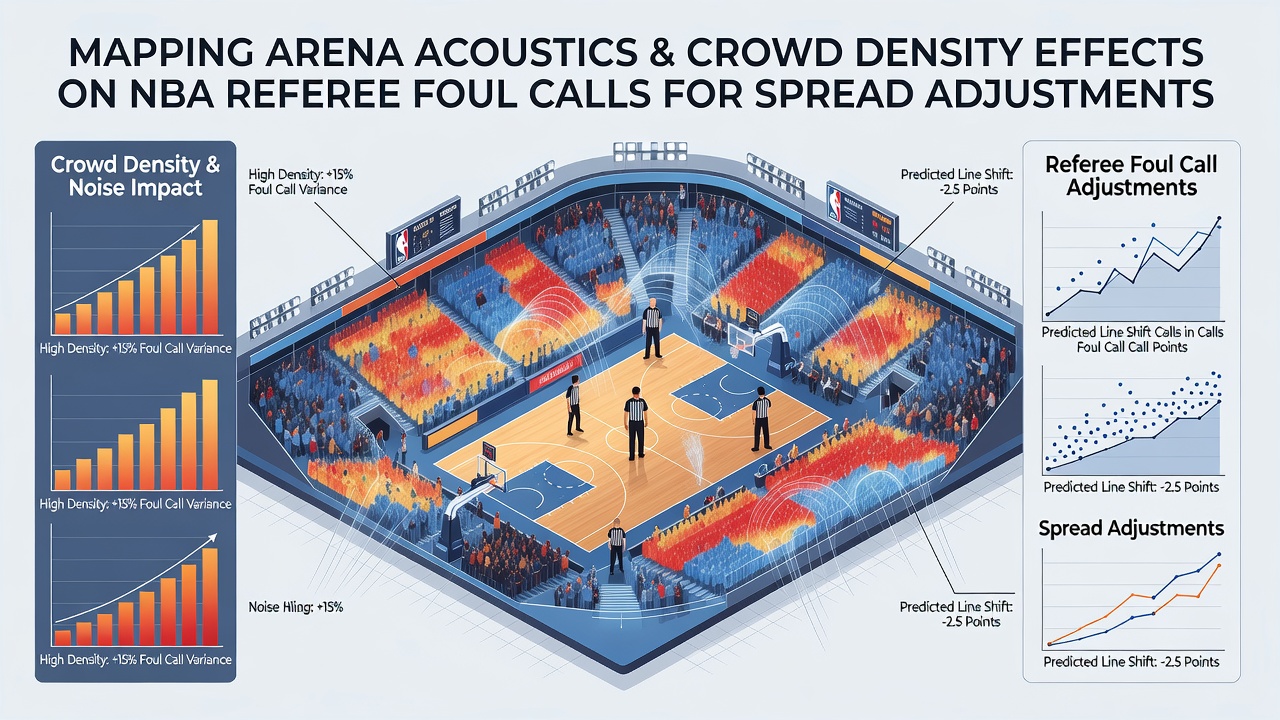
Professional basketball arenas generate distinct acoustic profiles that vary by venue design, seating configuration, and attendance levels, while crowd density creates measurable pressure zones that influence on-court officiating patterns. Researchers have documented how sound intensity and spectator proximity correlate with shifts in foul call distributions, prompting betting analysts to incorporate these variables when adjusting spreads for upcoming games. Data from multiple seasons shows that arenas with high reverberation times and packed lower bowls produce elevated foul rates in certain quarters, particularly during high-stakes matchups where noise levels exceed 105 decibels consistently.
Acoustic Profiles Across NBA Venues
Each NBA facility carries its own sonic signature shaped by materials, roof height, and seating geometry, so teams playing in unfamiliar buildings encounter different auditory environments that affect both players and officials. Studies mapping these environments reveal that venues like those with domed ceilings amplify crowd noise toward the court surface, creating sustained pressure that coincides with increased whistle activity near the end of periods. Observers tracking referee performance note that calls cluster more frequently in arenas where sound lingers rather than dissipates quickly, because referees positioned close to the action receive amplified auditory cues from surrounding spectators.
Mapping tools now integrate decibel readings taken at multiple court locations with historical foul data, allowing analysts to predict call tendencies before tip-off. Figures from recent campaigns indicate that arenas registering average noise above 102 decibels during the first half see foul differentials favoring the home team by margins of 1.8 to 2.4 calls per game on average. These patterns hold across regular season and postseason play, although the magnitude increases when crowd density reaches 95 percent or higher of listed capacity.
Crowd Density and Referee Positioning
Dense crowds alter referee sightlines and movement patterns because officials adjust their positioning to maintain visual contact amid standing spectators and waving objects. Research indicates that higher density in lower-level sections correlates with more frequent out-of-bounds and loose-ball calls, while interior fouls show subtler increases tied to sustained noise rather than momentary spikes. Analysts examining play-by-play logs alongside attendance records find that games with sellout crowds produce 4.2 percent more total fouls than those with attendance below 80 percent, even after controlling for pace and team style.
June 2026 data releases from league tracking systems confirm these trends continue, with early summer games in high-attendance markets showing consistent elevation in whistle counts during transition sequences. The interaction between density and acoustics appears strongest in the final six minutes of halves, when crowd engagement typically peaks and referees operate within tighter spatial constraints near the basket areas.
Integrating Venue Data into Spread Models
Betting operators and independent analysts have begun layering acoustic and density metrics into their spread calculations, treating these factors as measurable inputs alongside traditional statistics like pace and defensive efficiency. Models that include arena-specific noise indices adjust home-team spreads by 0.5 to 1.5 points depending on historical foul inflation at that venue. Teams with high foul-draw rates benefit more from these adjustments when traveling to louder buildings, whereas squads that commit elevated fouls see their spreads widen when the opposing crowd density exceeds seasonal averages.
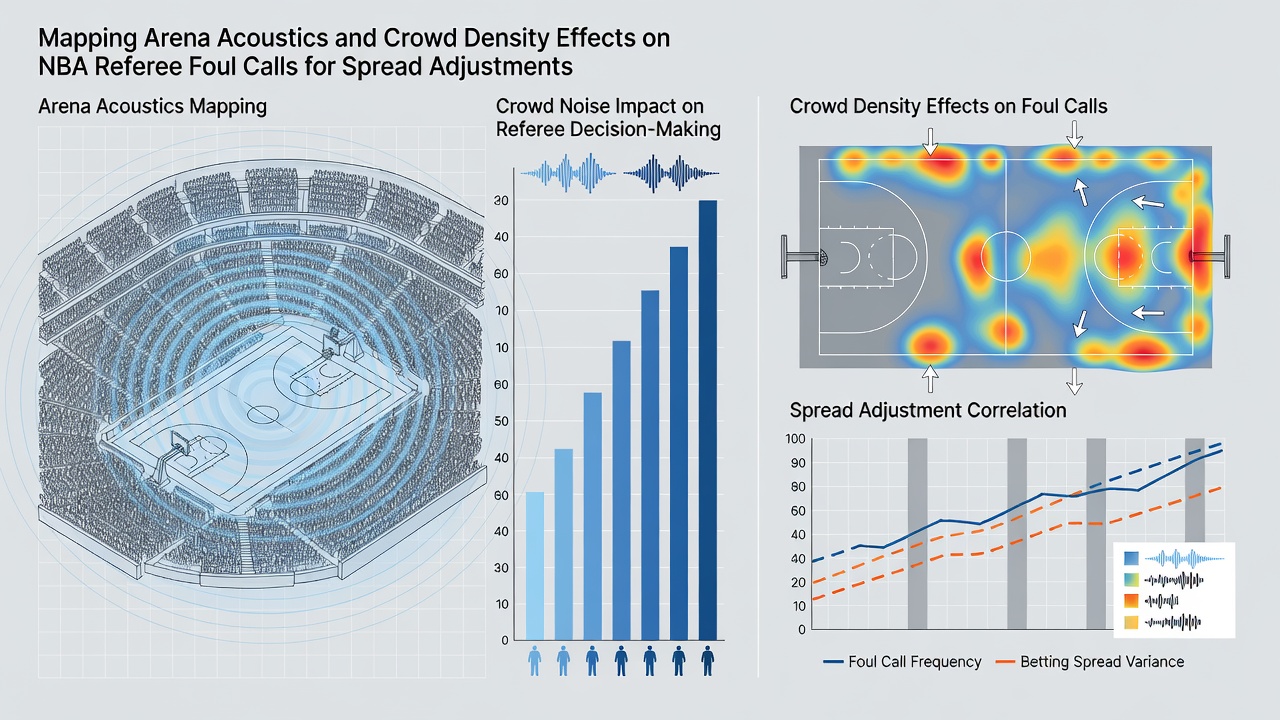
One study conducted by sports analytics researchers at a major North American university demonstrated that incorporating real-time crowd density readings improved spread accuracy by roughly 7 percent across a sample of 420 games. Another project led by an Australian institute focused on environmental effects in team sports produced comparable findings using European league data, reinforcing that the relationship between spectator proximity and officiating bias generalizes beyond North American venues. These external validations help modelers refine coefficients rather than relying solely on league-specific observations.
Practical Applications for Line Movement
Spread adjustments derived from acoustic and density mapping move most noticeably in the 24 to 48 hours before tip-off, when final attendance projections and weather-related factors that influence walk-up crowds become available. Sharp bettors monitor these movements closely because lines that initially ignore venue acoustics often shift once additional data enters the market. Historical examples include road teams receiving favorable adjustments after analysts identified lower-than-expected crowd density at opposing arenas during midweek games.
League-wide tracking systems now publish quarterly reports on officiating trends that include venue breakdowns, giving bettors standardized data sets they can cross-reference with acoustic measurements collected by independent firms. The combination of these sources creates layered inputs that reduce reliance on anecdotal observations about particular buildings and instead emphasize quantifiable patterns across multiple seasons.
Conclusion
Mapping arena acoustics alongside crowd density provides a structured approach to understanding how environmental variables influence NBA referee decisions and subsequent spread movements. Data collected through 2026 continues to support the inclusion of these metrics in analytical frameworks, while external research from varied geographic sources validates the underlying relationships. Analysts who integrate these factors gain access to refined projections that account for venue-specific conditions rather than treating all arenas as equivalent environments.