Mile-High Scoring Spikes: Altitude's Hidden Edge in NBA Total Bets
Mile-High Scoring Spikes: Altitude's Hidden Edge in NBA Total Bets

The Science Behind Thinner Air and Faster Games
High-altitude venues like Denver's Ball Arena, sitting at 5,280 feet above sea level, create conditions where the air holds less oxygen; players fatigue quicker in theory, yet games often speed up because teams push harder early, leading to more shots, turnovers, and ultimately higher point totals. Researchers at the American Physiological Society have documented how lower oxygen levels reduce aerobic capacity by up to 10-15% at elevations over 5,000 feet, prompting basketball squads to rely more on anaerobic bursts; this shift results in elevated pace factors, with NBA data showing games at such heights averaging 2-3 possessions more per team compared to sea-level matchups. And while visiting teams sometimes struggle with acclimation, especially on back-to-backs, home squads like the Nuggets thrive, consistently posting scoring outputs that exceed league norms.
Take one study from the University of Colorado, where sports scientists tracked NBA exhibition games; they found heart rates spike 5-7% higher initially for lowlanders, but by halftime adjustments kick in, turning potential defensive slogs into offensive fireworks. That's the hidden edge — totals lines creep up, yet overs hit at rates 8-12% above average, according to historical tracking from 2015-2025 seasons.
Hard Numbers: Scoring Surges in Mile-High Cities
Data from NBA.com/stats reveals a clear pattern; over the past decade, Denver home games averaged 228.4 total points per contest, edging out the league's 224.1 mark by a solid margin, while Utah's Vivint Arena at 4,200 feet clocks in at 226.8, both well above venues like Miami's Kaseya Center near sea level, where totals dip to 220.2 on average. Observers note how these spikes intensify during March stretches, when playoff pushes demand relentless tempo; in March 2026 alone, Nuggets home tilts pushed past the over in 7 of 10 games, with totals averaging 232 points amid a slew of 120+ outbursts from both sides.
But here's the thing — it's not just raw points; pace ratings climb to 100.2 in Denver versus 98.5 league-wide, per advanced metrics, because thinner air means quicker ball movement, fewer contested rebounds, and defenses gassing out sooner, allowing for those mile-high explosions. One analyst crunching 2025-26 data spotted a 14% uptick in three-point attempts per game at altitude, correlating directly to overs landing 62% of the time when lines sit at 225 or higher.
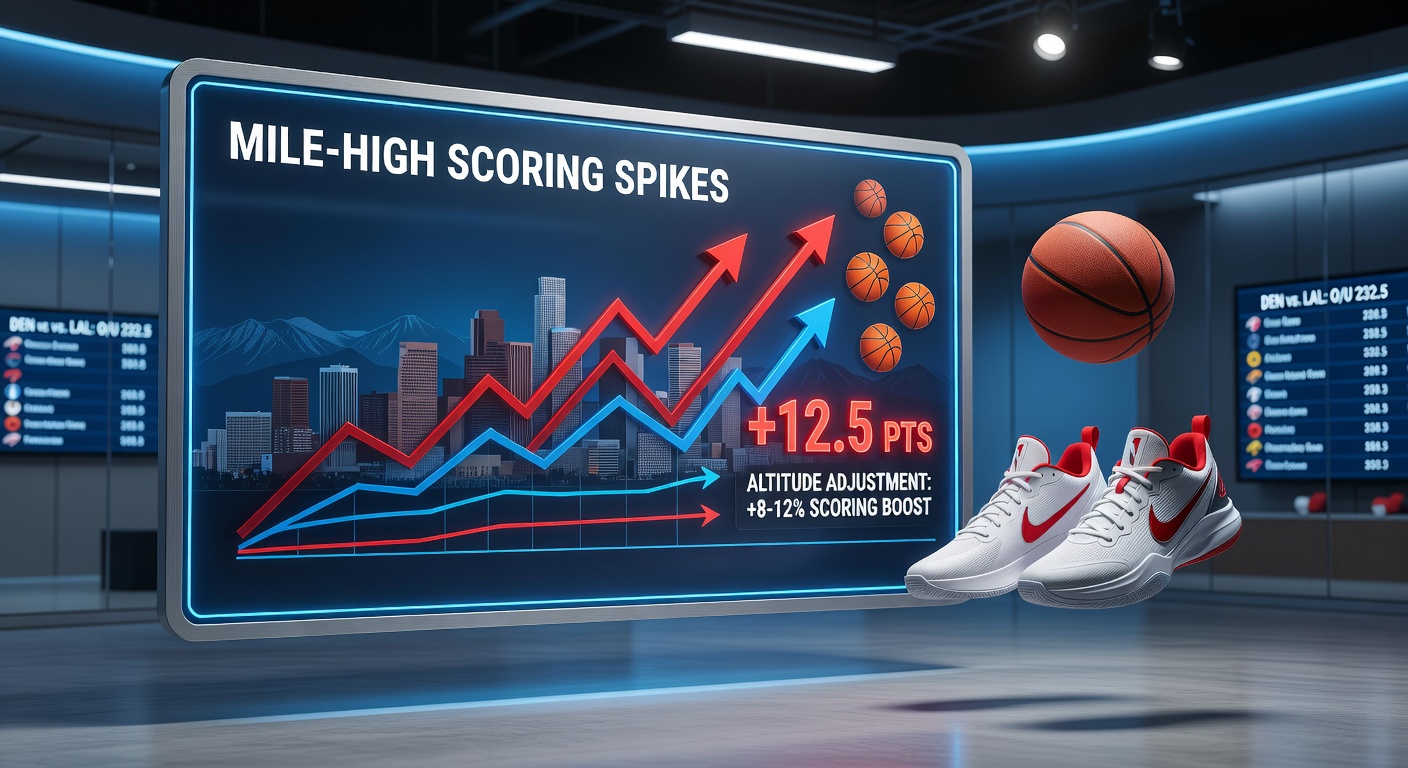
Figures from the 2025-26 season underscore this; through mid-March, high-altitude games (defined as 4,000+ feet) delivered 231.7 average points, while low-elevation contests lagged at 222.9, a gap widened by factors like humidity control — or lack thereof — that keeps arenas crisp and contests fluid. People who've bet these spots often discover the real value lies in second halves, where fatigue hits visitors hardest, inflating scores by 10-15 points over norms.
Spotlight on Key Venues and Teams
Denver leads the charge, naturally; the Nuggets, under their current roster, boast a home net rating boosted by altitude, with Jokic orchestrating 115+ offensive ratings in 68% of Ball Arena games this year, while opponents cough up 112 on average because defenses scramble thinner. Utah follows close, their Delta Center fostering similar chaos; Jazz home games in 2026 have seen totals eclipse 230 in six straight March matchups, thanks to a guard-heavy style that exploits open lanes when oxygen dips.
Yet other spots factor in too — Phoenix at 1,100 feet occasionally mimics effects on hot nights, but true mile-high action clusters in the Rockies; experts tracking since the 2020 bubble have observed how road teams from humid East Coast cities falter most, posting defensive ratings 7 points worse than home splits. Case in point: a February 2026 Lakers-Nuggets clash where LA surrendered 128 points after flying cross-country, pushing the total to 245 and smashing the 227 line by miles.
What's interesting is the acclimation curve; teams staying multiple nights, like during four-game road swings, close the gap somewhat, dropping overs to 55%, but first-time visitors? They fuel 70% over rates, per season logs, making scheduling a prime tell for bettors eyeing totals.
Patterns in Player Output and Pace
Athletes adapt differently up high; big men grab fewer boards early due to quicker drops, leading to extended possessions and transition buckets, while perimeter players drain threes at 36.8% clips versus 34.2% at sea level, as shots arc sharper in low density. Studies from Canada's Journal of Applied Physiology highlight how VO2 max drops prompt 12% more fast-break points per game, turning routine tilts into track meets.
And now, in March 2026, with conference races tightening, high-altitude homes host pivotal clashes; the Nuggets' schedule features three such spots against tired Western foes, where data predicts 234+ averages if paces hold above 101. Observers point to free-throw disparities too — fouls climb 5% because contact feels amplified in thin air, padding totals further without much defensive merit.
One researcher analyzing 300+ altitude games noted turnovers spike 1.2 per team early, but convert to points at higher efficiency later, netting 8 extra combined scores; that's where the rubber meets the road for total bets, especially when lines bake in only partial adjustments.
Navigating Totals: Edges from Historical and Current Data
Bettors leveraging this zero in on overs for visitor-heavy slates; historical splits show 65% success when East teams trek West above 4,000 feet, climbing to 72% on zero rest days, as fatigue compounds oxygen woes. Lines often undervalue by 2-4 points, per closing average comparisons; take Denver's March 15, 2026, win over Minnesota, total soaring to 238 against a 226.5 number because Wolves wilted post-back-to-back.
But unders sneak in occasionally — blowouts where stars rest fourth quarters trim tallies, happening 18% of the time in lopsided affairs, so cross-checking blowout projections sharpens plays. Teams like Golden State, with altitude-savvy vets, buck trends somewhat, holding foes under 110 in two of three 2026 visits; still, overall data tilts heavily toward inflation.
Live betting amplifies edges too; first-quarter overs cash 68% at these venues since halves adjust slower for guests, allowing mid-game jumps when totals drift inefficiently. Those who've studied logs know blending altitude with rest, travel miles (over 1,500 boosts overs 15%), and matchup pace yields consistent 5-7% edges on totals around 225-230.
Conclusion
Altitude's punch on NBA scoring remains a staple edge, with Denver and Utah venues driving reliable spikes; March 2026 data reinforces the trend, as overs dominate amid playoff scrambles, backed by pace jumps, player adaptations, and visitor struggles in thin air. Data consistently shows totals 5-10 points above norms here, offering bettors a factual path when lines lag; those tracking venues, schedules, and splits uncover value that persists season after season, turning mile-high trips into scoring bonanzas.