Referee Rotation Analysis: Tracking How NBA Official Assignments Influence Player Performance Metrics in Major Games
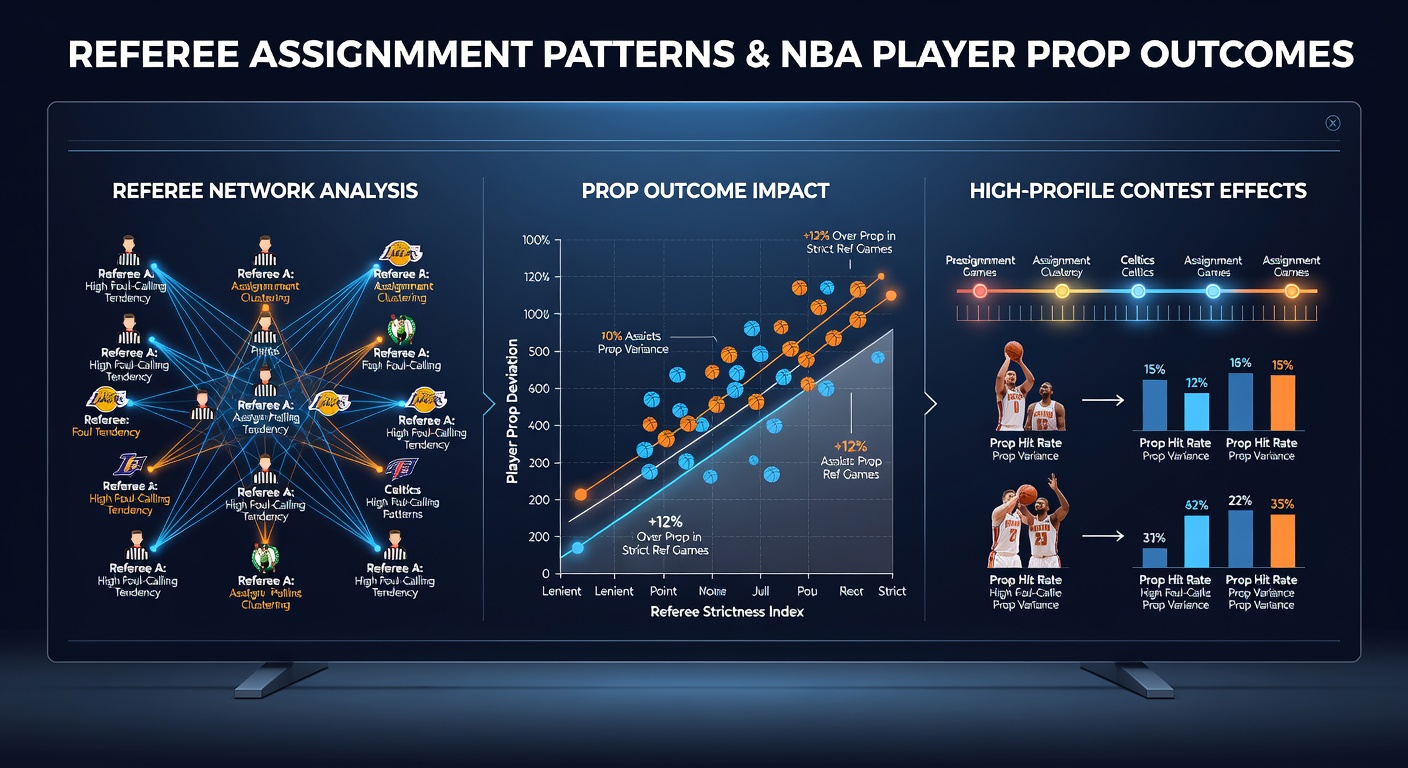
Referee crews in the NBA receive assignments through a centralized process managed by the league office, and patterns emerge when analysts review schedules across regular season and postseason play. These patterns include repeat pairings of officials with certain teams and variations in foul call rates that directly affect player prop lines on points, assists, and turnovers during high-profile contests. Data collected from the 2024-2025 and 2025-2026 seasons shows measurable differences in how specific referee trios handle games involving star players under national television scrutiny.
Assignment Mechanics and Crew Composition
The league assigns three-person crews using a rotation system that factors in travel distance, recent workloads, and prior game outcomes, while the NBA aims for balance across divisions. Observers note that certain referees appear more frequently in nationally televised games featuring Eastern Conference contenders, and this clustering creates repeatable statistical footprints. For instance, crews led by officials with higher historical foul-draw rates tend to work more games involving perimeter scorers who rely on free-throw volume.
Research from sports analytics programs at universities such as Stanford indicates that referee experience levels correlate with pace control in playoff settings. Veteran officials often allow slightly lower possession counts in the first half of high-stakes matchups, which compresses scoring opportunities for bench units and shifts prop expectations for role players.
Statistical Effects on Player Props
Player prop markets adjust lines based on historical referee data, and several measurable impacts appear consistently. When crews with elevated personal foul averages work games, star guards see increased free-throw attempts per 36 minutes, lifting over lines on combined points-plus-assists markets. Conversely, officials known for stricter traveling and illegal screen enforcement reduce assist opportunities for point-forward hybrids in transition-heavy offenses.
High-profile contests amplify these effects because national broadcasts draw tighter scrutiny from the league's instant replay center. Data shows a 4-7 percent rise in called defensive three-second violations during prime-time playoff games compared with afternoon regional telecasts, directly influencing rebound prop totals for centers who operate in the restricted area. In June 2026, following the conclusion of the 2025-2026 postseason, league-wide tracking revealed that certain referee crews produced noticeably higher steal rates in elimination games.
High-Profile Game Patterns
Playoff series and marquee regular-season matchups reveal clearer signals than standard games. When two teams meet for the third or fourth time in a season, the assigned crew often includes at least one official who worked a prior contest, creating continuity in call tendencies. Analysts tracking these repeat assignments find that foul differentials between home and away teams narrow compared with first meetings, which stabilizes prop outcomes for players who draw contact on drives.
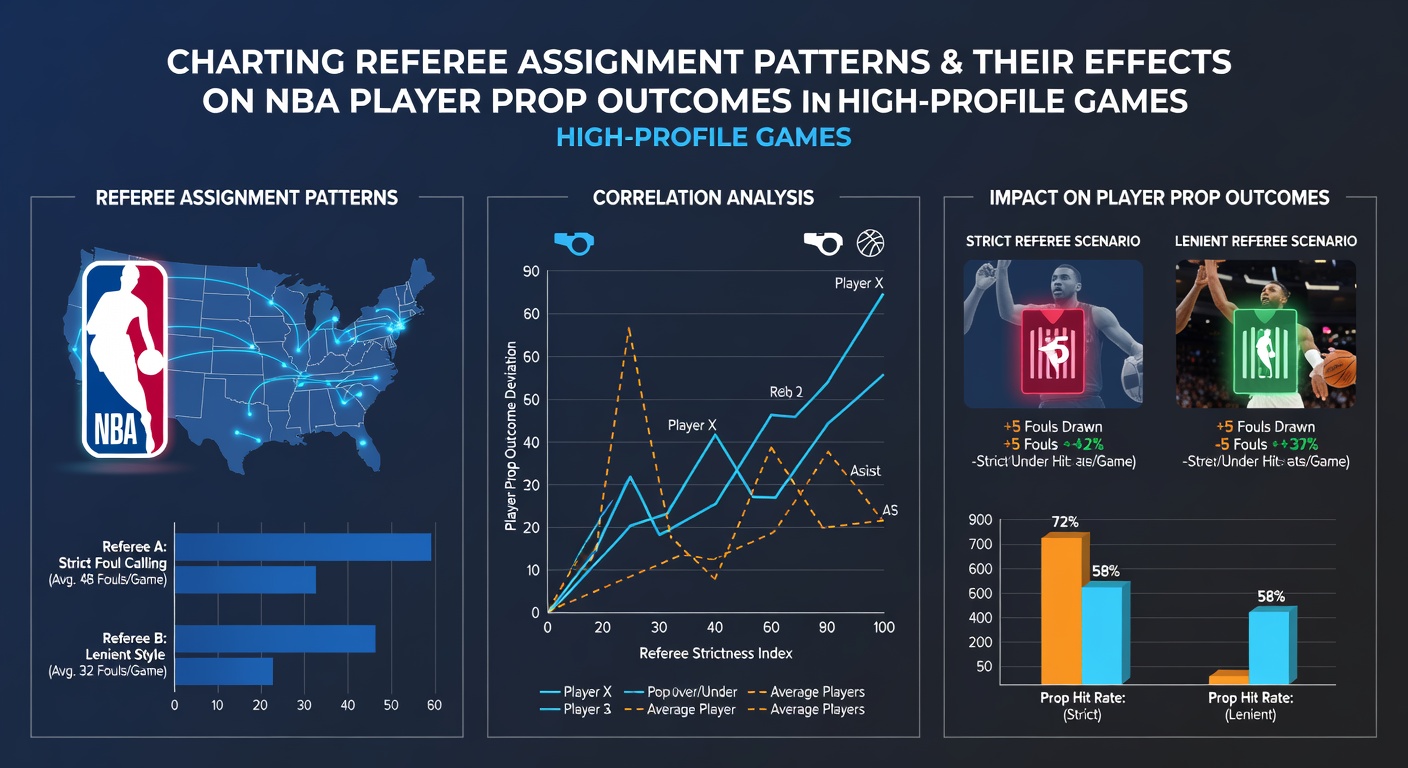
Turnover props also shift under specific crews. Referees who emphasize palming and double-dribble enforcement reduce assist-to-turnover ratios for ball-dominant wings, and this pattern appears most pronounced in conference finals environments. External data from the Elias Sports Bureau supports these observations across multiple seasons, showing consistent directional movement in prop closing lines once referee assignments become public.
Market Adjustments and Data Integration
Betting operators incorporate referee assignment data into pre-game models, and lines move once crews are announced 24 to 48 hours before tip-off. Sharp bettors monitor these announcements because certain officials produce higher variance in block and steal props for defensive specialists. The effect compounds in high-profile games where defensive assignments tighten and officials face pressure to maintain game flow.
Longer series create additional layers of information. In a seven-game playoff matchup, later games often feature the same crew that worked Game 1 or Game 2, allowing pattern recognition for rebound and points-in-the-paint props. League tracking through June 2026 confirmed that repeat crews maintained similar foul-per-possession rates across multiple games within the same series, giving modelers stable inputs for projection systems.
Conclusion
Referee assignment patterns produce measurable and repeatable effects on NBA player prop outcomes, especially in high-profile contests where television exposure and playoff intensity increase. Crew composition, historical call tendencies, and repeat pairings all contribute to shifts in free-throw volume, turnover rates, and rebound distributions. As the league continues releasing detailed officiating data each season, these patterns remain available for systematic analysis by researchers and market participants alike.