Referee Tendencies Shape NBA Foul Props During Extended Playoff Runs
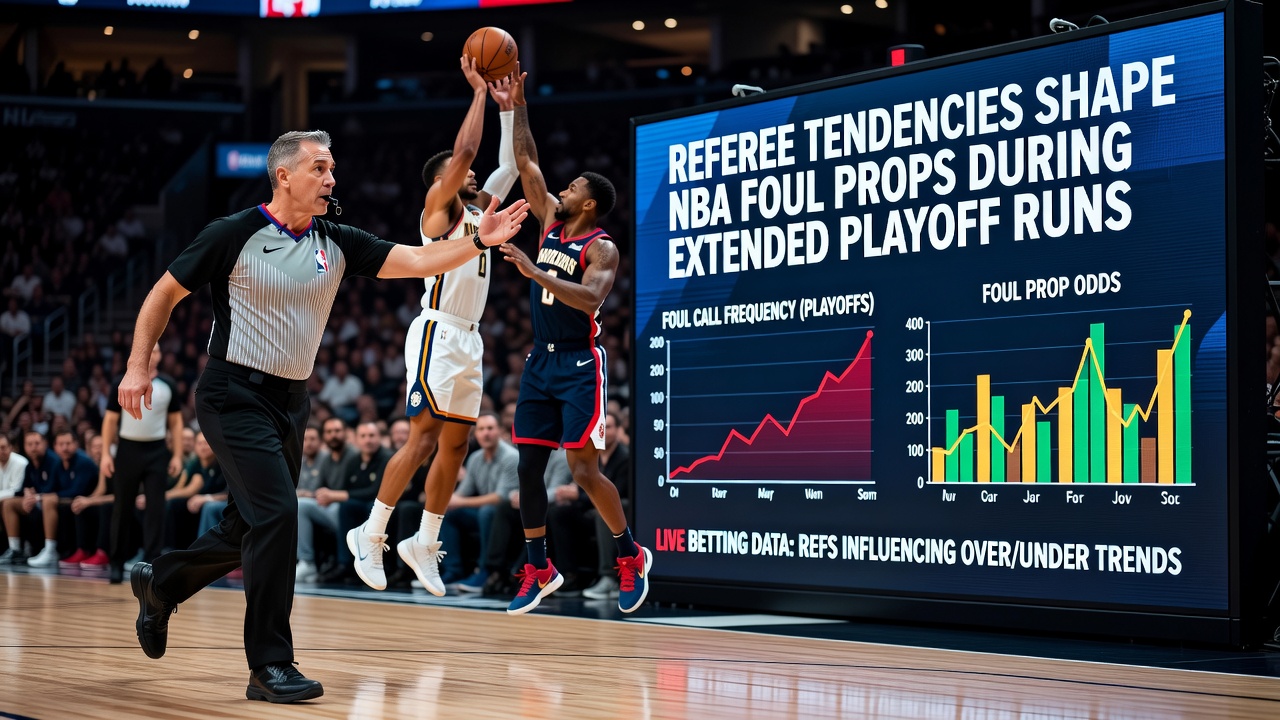
Referee assignments and historical foul-calling patterns influence player prop markets throughout the NBA postseason, particularly when series extend beyond five games. Data from multiple playoff cycles shows that certain officials maintain consistent foul rates even as fatigue sets in for both players and crews, while others adjust their whistle frequency based on game context and series length. Bettors tracking foul props examine these tendencies because extended runs into late May and June often feature repeat referee groups whose prior performances create measurable edges in over-under lines.
Playoff Referee Rotation Patterns
The league selects officials for postseason games using a performance-based system that rotates crews across conference semifinals, conference finals, and the championship round. Observers note that the same three-person crews frequently work multiple games within a single series once that series reaches six or seven games, creating continuity that bettors can analyze. During the 2026 postseason, several crews that handled early-round matchups returned for later rounds, and their foul totals per game remained within narrow ranges established during the regular season.
Extended series increase the number of available data points for each referee trio. When a series stretches into a sixth or seventh game, analysts compile foul distributions from prior contests involving those same officials and compare them against league averages. Research indicates that crews with higher baseline foul rates tend to maintain those rates across back-to-back playoff games, whereas crews with lower rates often produce totals below the posted prop lines for total fouls in later games of long series.
Foul Rate Shifts in Later Rounds
Statistics compiled across recent postseasons reveal that average fouls per game decline slightly from the first round to the conference finals, yet individual crew deviations remain significant. One study of playoff data found that certain referees called 4.2 more fouls per game than the postseason average when assigned to series that reached six games or more. Those deviations directly affect player foul props, especially for frontcourt players who accumulate minutes in physical matchups that extend deep into June.
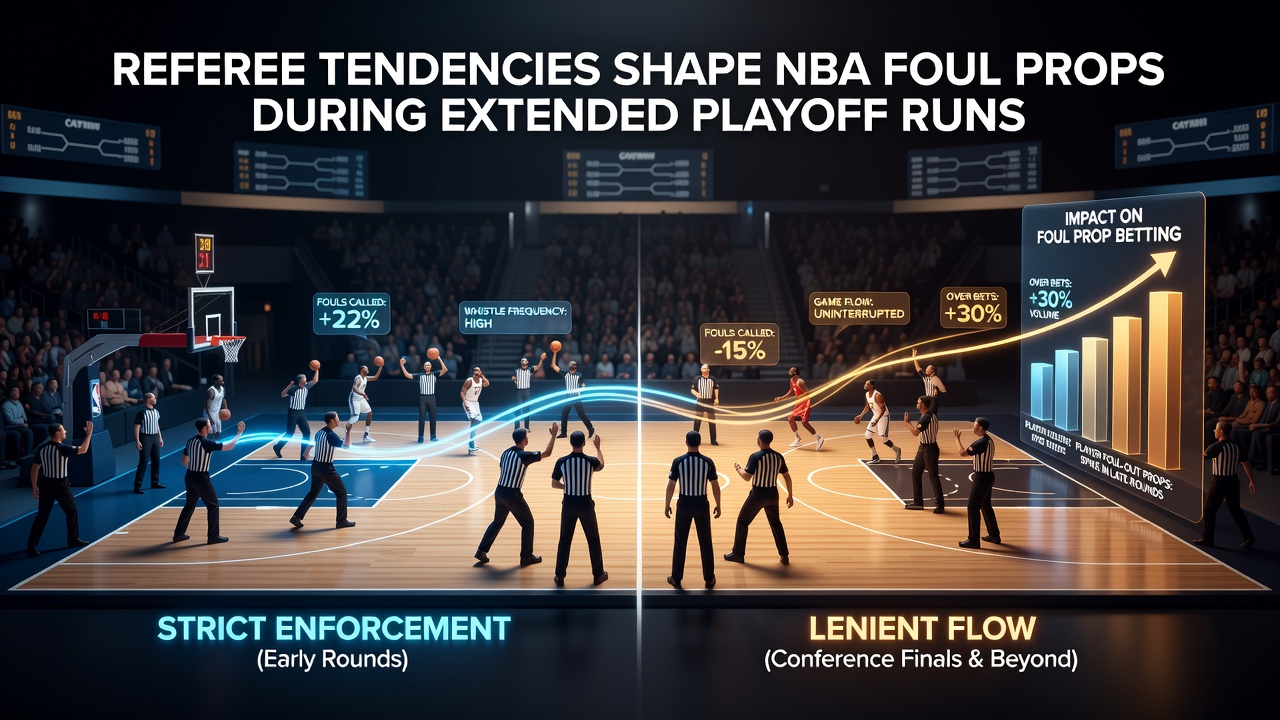
Teams that advance through longer playoff runs encounter the same referee groups multiple times, allowing prop bettors to identify patterns in how those officials distribute fouls between star players and role players. Data shows that officials who favor calling defensive fouls on help-side defenders produce higher foul totals for teams employing switching schemes, while crews that emphasize perimeter contact generate elevated foul lines for guards who drive frequently. These distinctions become more pronounced when series extend because both teams adjust strategies based on earlier games officiated by the same crew.
Impact on Individual Player Props
Player-specific foul props require examination of referee history with particular athletes. Several officials demonstrate measurable tendencies to call more or fewer fouls on high-usage stars during extended minutes, and those tendencies persist across multiple playoff appearances. When a series reaches game six or seven, the accumulated sample size allows sharper projections for props such as over 4.5 fouls committed by a given player or under 22.5 combined fouls for both teams.
Extended playoff runs also coincide with increased physicality, yet referee tolerance levels vary. Crews that issued higher foul totals in earlier rounds of a series often continue that rate even as games become more physical, producing totals that exceed the adjusted lines set by sportsbooks. Conversely, crews known for allowing more contact maintain lower foul counts, which affects under props for players whose regular-season averages include more whistle-heavy games.
Data Sources and Analytical Approaches
Comprehensive tracking relies on play-by-play logs and referee-specific datasets maintained by league statisticians. According to research presented at the MIT Sloan Sports Analytics Conference, playoff foul distributions exhibit greater variance at the crew level than at the league level, which supports the use of referee-specific models when constructing prop bets. Additional figures from the Nevada Gaming Control Board show elevated betting volume on foul-related props during conference finals and championship series, reflecting increased attention to these patterns among professional bettors.
Those who model these props combine referee foul rates with player minutes projections and series length expectations. When a series projects to reach six or seven games, the probability that a particular crew works multiple remaining contests rises, amplifying the value of historical crew data over generic playoff averages.
Conclusion
Referee tendencies established during extended playoff runs continue to shape foul prop outcomes because the same crews often handle multiple games within the same series. Objective analysis of crew foul rates, player-specific histories, and series progression provides the factual foundation for evaluating these markets through late June.